Everyone knows about the housing shortage. But there's a second shortage underneath it that rarely makes it into housing policy debates, and it may be harder to solve than the first. America doesn't just lack homes — it lacks the people and systems to build them.
A workforce that's aging out
The construction industry is facing a demographic reckoning that has been accumulating for decades. Experienced tradespeople — framers, electricians, project managers, estimators — are retiring faster than they're being replaced. Fewer young people are entering the trades, and the pipelines that once fed the industry are thinner now. This isn't a temporary staffing problem; it's a structural one. Even if every zoning barrier in America disappeared tomorrow, the industry wouldn't have the capacity to respond. More demand doesn't create more builders — it just creates more backlog.
The deeper problem with "just build more"
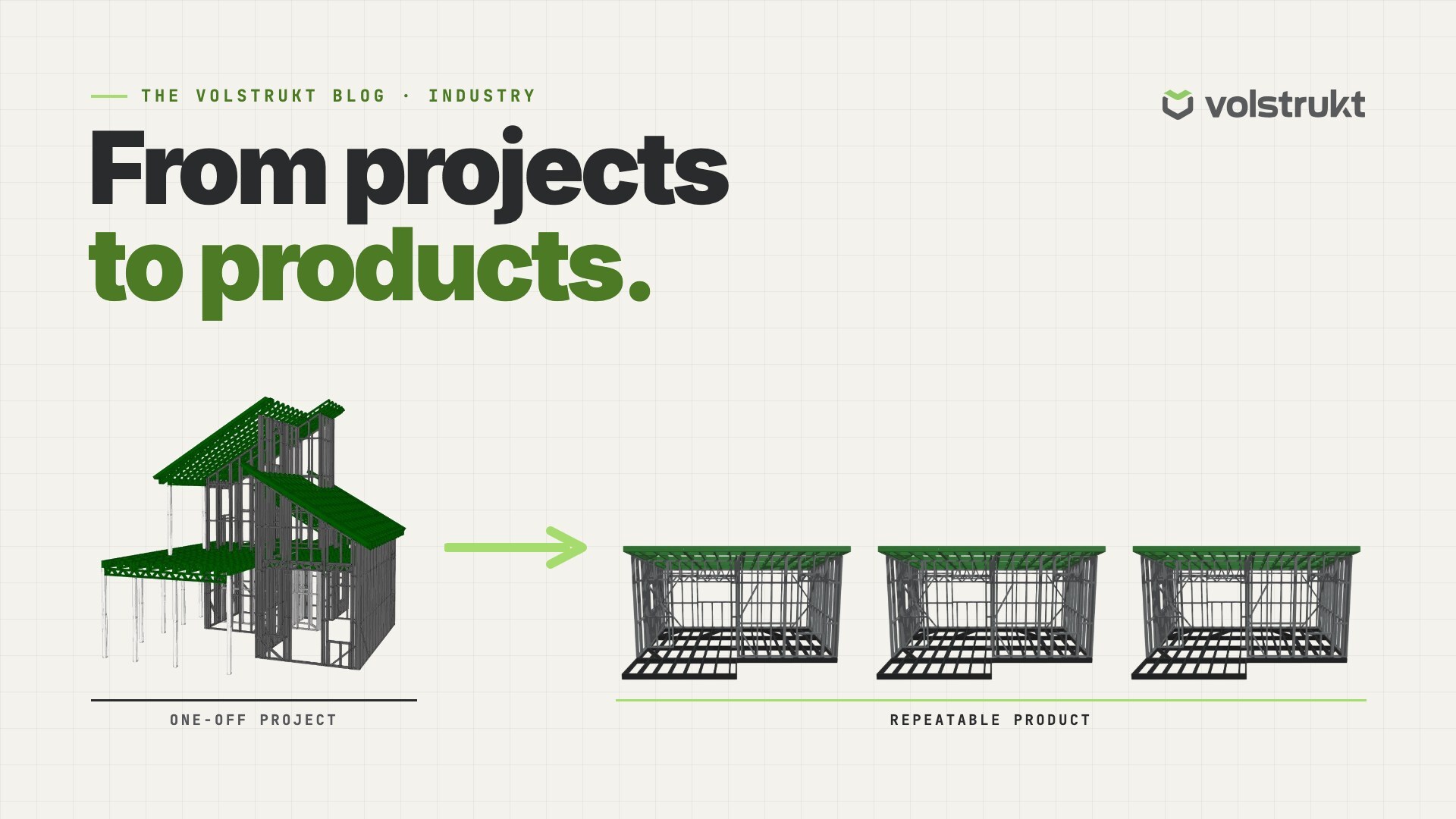
The standard response to the housing shortage — build more homes — sounds simple until you examine how homes actually get built. A conventional residential project involves hundreds of decisions, dozens of subcontractors, extensive field coordination, and months of weather-dependent labor. Even when two homes are nearly identical, they're typically treated as entirely separate undertakings. Every project starts from scratch; engineering gets recreated; mistakes get made and corrected in the field, expensively. That model worked fine when labor was abundant. It doesn't scale when labor is constrained and demand keeps rising.
What other industries already figured out
Housing isn't the first industry to hit this wall. Automobiles, furniture, and consumer electronics each went through a version of the same transition: custom, labor-intensive production gave way to standardized designs, repeatable systems, and manufacturing approaches that improved quality while reducing the labor required per unit. This doesn't mean every home should look alike — it means more of the work can happen before materials arrive on site. The goal isn't to eliminate skilled tradespeople; it's to let them do more of what they're good at, and less of the repetitive work that consumes their time.
Technology is closing the gap
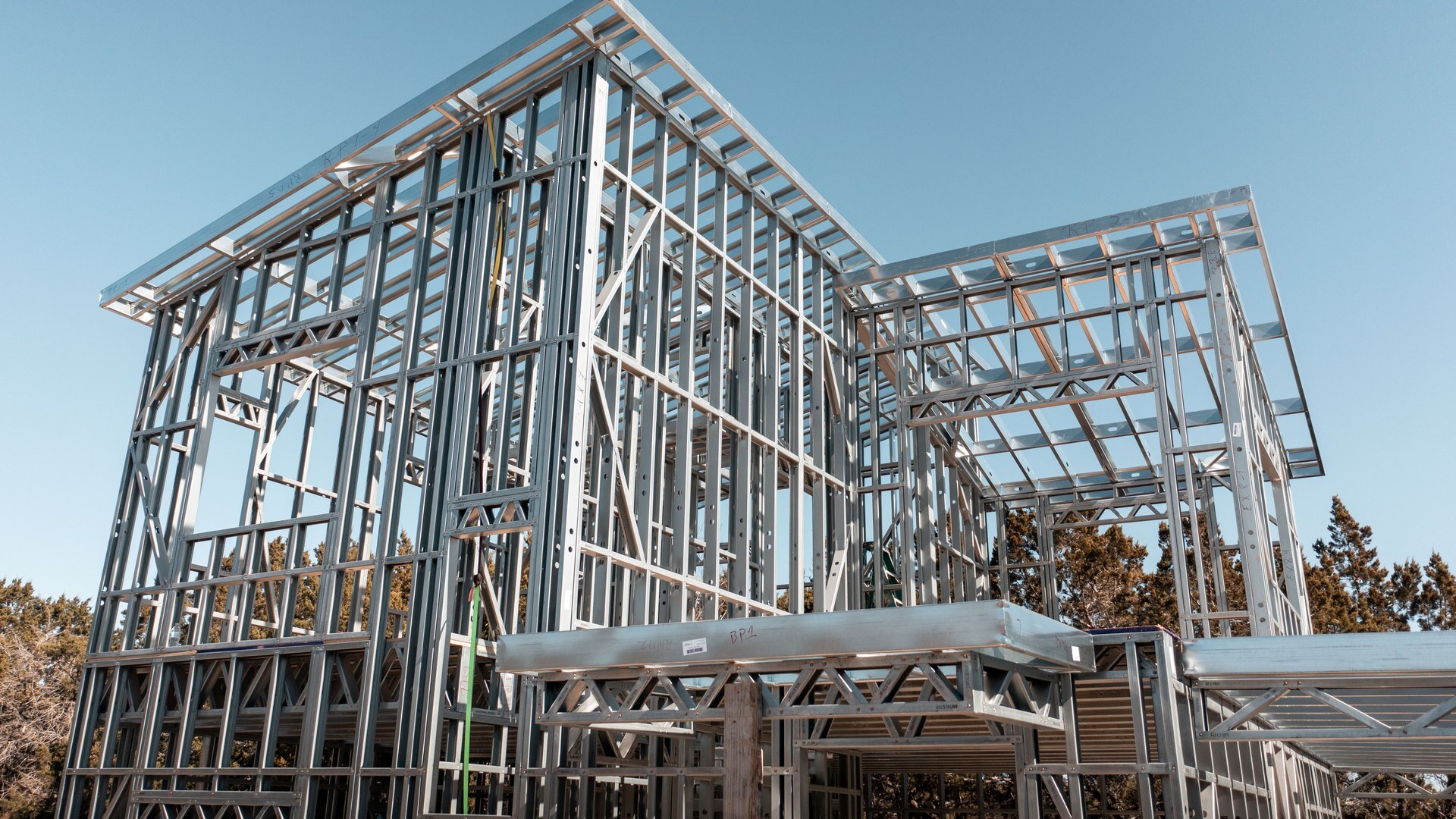
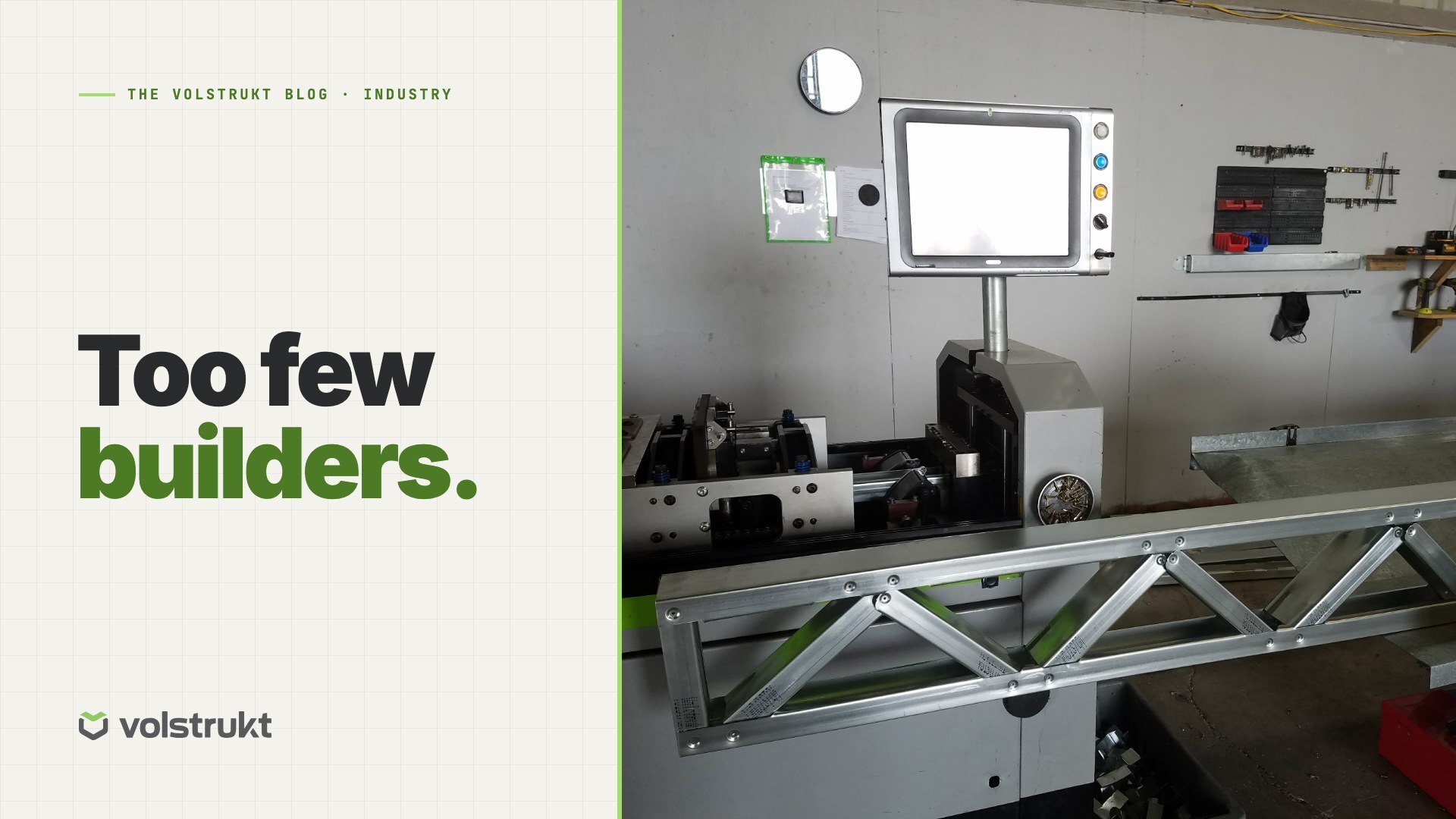
Digital design tools now allow homes to be fully modeled, coordinated, and optimized before a single stud is cut. Off-site manufacturing allows structural components to be produced with factory precision and delivered ready to assemble. When design, engineering, and manufacturing work together as a system, the results are measurable: faster delivery, more predictable schedules, less material waste, better quality control, and meaningful cost savings. None of this eliminates the need for builders — it changes what builders spend their time on, and how much they can accomplish.
The real path forward
Solving the housing crisis will require better policy, better financing, and sustained investment in the construction workforce. But it will also require a fundamental rethinking of how homes get delivered. The builders of the next decade won't just need more permits to pull — they'll need better systems to work within, systems that make each skilled worker more productive and each project more predictable. Building more isn't enough. Building smarter is the only way through.
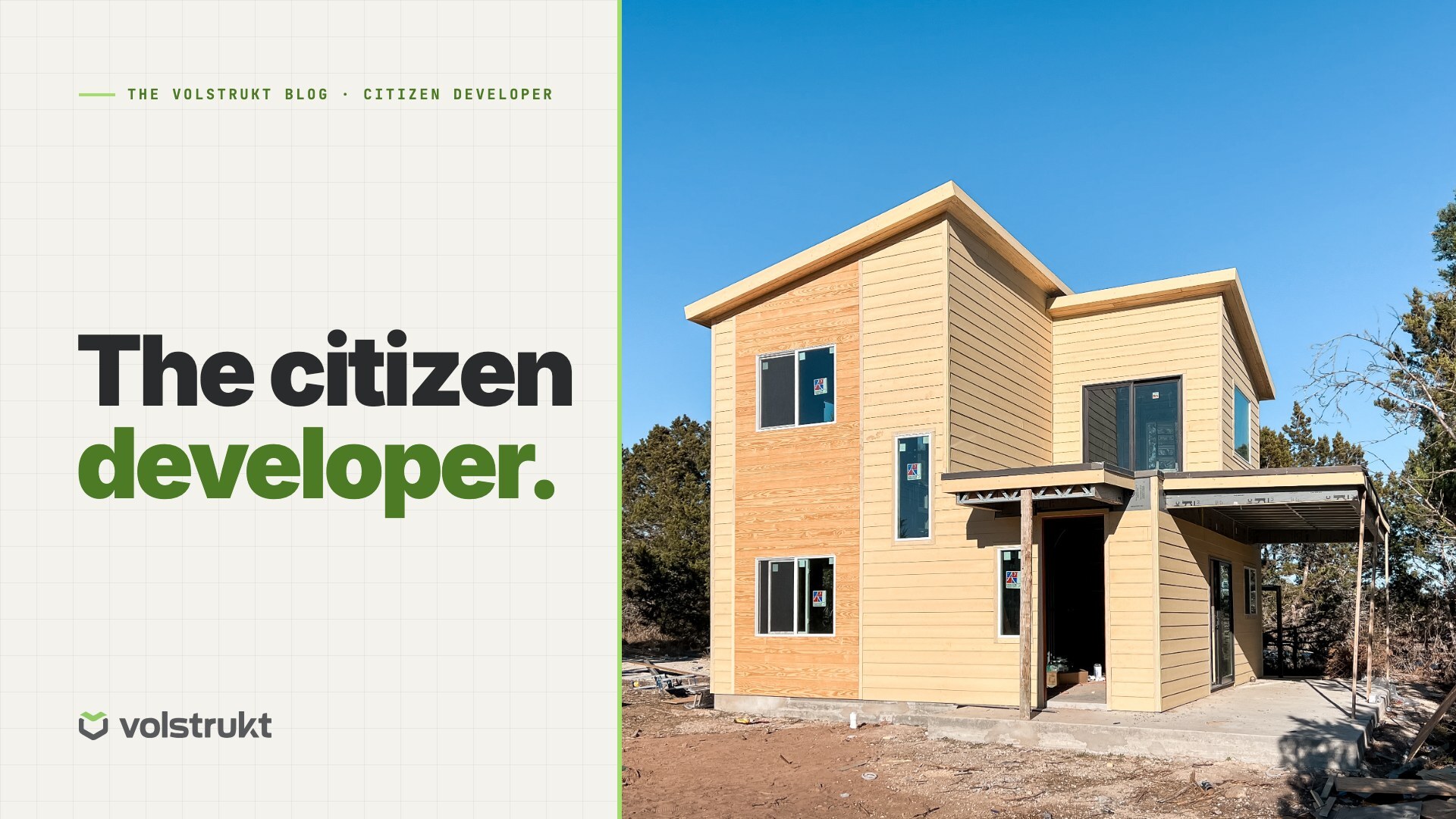
The Volstrukt HOME Initiative helps property owners, builders, and aspiring citizen developers access build-ready design packages, digitally manufactured framing systems, and procurement support — designed to make housing delivery more accessible, predictable, and scalable.
Planning a build?
Tell us about your project. We turn house designs into engineer-stamped, build-ready steel framing systems — and we reply within one business day.
Start a project →